
Starting a new construction project in Gurugram or Delhi is exciting, but the first few decisions around materials often feel overwhelming. Prices vary area to area, quality fluctuates, and small choices can affect the strength of your structure. This guide will help you understand the basics so you can buy confidently.
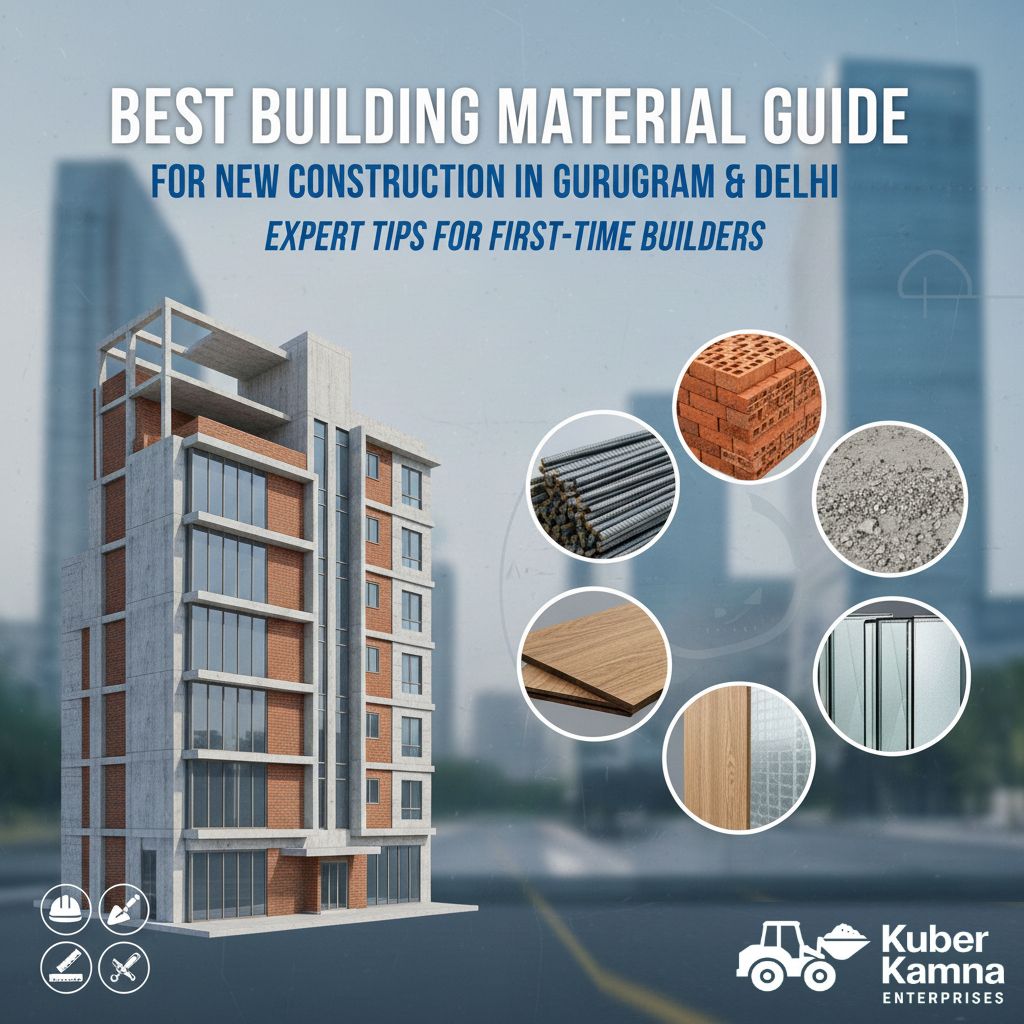
1. Understanding the Role of Core Materials
When you step onto any active site here, you’ll notice the same essentials—cement, sand, stone dust, bricks, and aggregates.
Their quality decides how smoothly your project moves and how durable the final structure becomes.
Cement:
Most residential projects use OPC 43/53 grade or PPC. OPC gives faster strength, while PPC works well for plastering and brickwork because it sets smoother.
Bricks:
In Delhi–Gurugram markets, red clay bricks (size 9×4.25×3 inches) are still preferred for regular walls. For straighter finishes, many homeowners are shifting to fly-ash bricks because of their uniform size.
2. Sand & Stone Dust – Knowing What’s Best for Your Site
Many first-time builders get confused between river sand and stone dust. Both have a purpose, but they behave differently during mixing.
River Sand (4.75 mm downward)
It feels soft when rubbed in hand and mixes evenly with cement. Good for plaster, brickwork, and flooring because it gives a smooth finish.
Stone Dust (0–4 mm)
In Gurugram construction markets, stone dust is commonly used for blockwork, concrete mixing, and base layers.
You’ll find variations like:
-
Black stone dust (denser, used where tighter compaction is needed)
-
Grey stone dust (general-purpose for concrete mixes)
When delivered fresh, the dust should not contain visible clay lumps. A simple site test—closing your fist with a handful of dust—helps. If it forms a hard lump, impurities are high.
3. Aggregates (Bajri) and Their Sizes
Aggregates are the backbone of your RCC work. A clean, well-graded aggregate improves both strength and workability.
Common sizes used in Delhi–Gurugram construction:
-
10 mm – used in plaster screeds, small concrete sections
-
20 mm – standard choice for slabs, beams, and columns
-
40 mm – mostly for base layers or large PCC foundations
Good aggregates won’t leave dust on your palm when you rub them. If they look too powdery, they’re likely mixed with crusher fines and will weaken your mix.
4. Checking Material Quality on Site
Even if you trust your supplier, basic checks save you from future issues.
-
Sand should fall freely and not feel sticky.
-
Cement bags should be fresh, not hardened from moisture.
-
Bricks should make a sharp sound when tapped together.
-
Aggregates should have angular edges, not rounded like river pebbles.
These small observations come from years of deliveries and real construction experience across Gurugram’s new sectors and Delhi’s outskirts.
5. Material Rates & Practical Buying Tips
Rates change quickly depending on the season and distance from the crusher zone.
Instead of chasing the cheapest vendor, focus on consistent quality. Poor sand or weak bricks often increase labour time and cement consumption, which ultimately costs more.
A simple rule many contractors follow:
Buy the primary materials—cement, bricks, aggregates—from trusted suppliers, and use competitive rates only for bulk items like dust and sand.
For new construction in Gurugram & Delhi, keeping material receipts and load pictures helps maintain transparency during the entire build.
6. When to Order What
Material planning saves both money and space.
-
Cement – Order in small batches; it loses strength if stored too long.
-
Sand & Dust – Order based on actual site space; uncovered piles collect moisture.
-
Aggregates – Can be ordered in bulk if storage is dry.
-
Bricks – Plan 2–3 deliveries instead of bringing the entire lot at once.
These are small but practical habits every first-time builder can adopt.